
Calle Marbella,6

29630 Fuengirola - Málaga

952 47 83 42

Patient Care

DR. SALVADOR NEBRO COBOS

Cataract surgery in Fuengirola- Mijas

Waterfalls

WE SOLVE YOUR DOUBTS AND CONCERNS

952 47 83 42

Why have cataract surgery with us?

In our clinic, we treat cataract surgery as more than just a technical procedure. It begins with a thorough assessment, where we analyse each case in detail, and continues with personalised attention at every step of the process, from surgical indication to discharge.

We rely on tecent-generation technology to offer maximum precision and safety, from the diagnosis to the surgery itself. But most importantly: each patient receives a treatment tailored to his or her visual and personal needs.

We know that every eye is unique. That's why our approach combines science, experience and a genuine human commitment con your visual well-being.

Safe and precise surgery

Rapid recovery and improved quality of life

Close attention before, during and after

Lenses adapted to your lifestyle

Highly specialised medical equipment

Personalised assessment

"At Clínica Dr. Nebro, we help you to see clearly, so that you can live life to the full".

Seeing well means living better, with more security, independence and joy.

It's not just eye surgery, it's an investment in your future.

DR. NEBRO CATARACT SURGERY UNIT

Our Fuengirola Cataract Surgery Team

A surgical team that puts your eyes and your wellbeing first

Dr. Salvador Nebro Cobos

Dry eye - Dra. de las Rivas Ramírez, Nieves

Dr. Nieves De Las Rivas

State-of-the-art technology

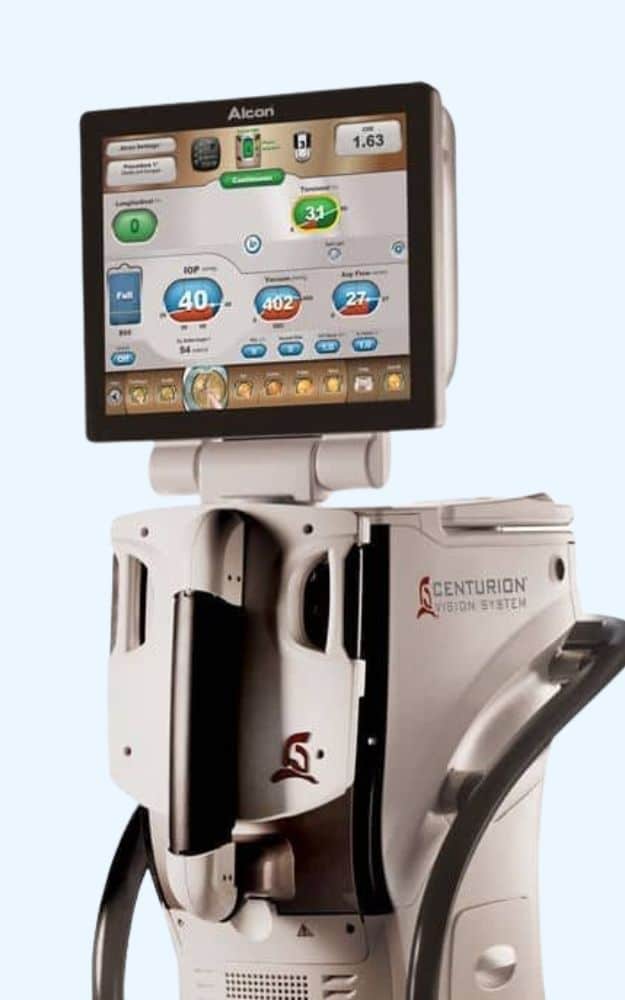
Centurion Phacoemulsifier

 At Clínica Dr. Nebro we have one of the most advanced surgical platforms in the world in ophthalmology.

Our team of state-of-the-art phacoemulsification guarantees a more effective intervention precise, safe and controlledThe system adapts in real time to the conditions of the eye during surgery.

Customised intraocular lenses

Today, science offers us a wide variety of intraocular lenses to adapt the vision of each patient according to their lifestyle.

We have monofocal lensesThe lenses are ideal for distance vision; single vision plus lenses, which allow us to see at a distance with a little help from near vision; multifocal lenses, which allow us to see both near and far without depending on glasses; edof lenses which allow us to see at a distance and at an intermediate distance. Each of these types of lenses can be toric, which means that they help us to treat astigmatism in those patients who need it.

The choice of lens is not standard. We customise it based on your habits, visual needs, professional activity and expectations.

Customised intraocular lenses for every lifestyle
REQUEST APPOINTMENT

What are cataracts?

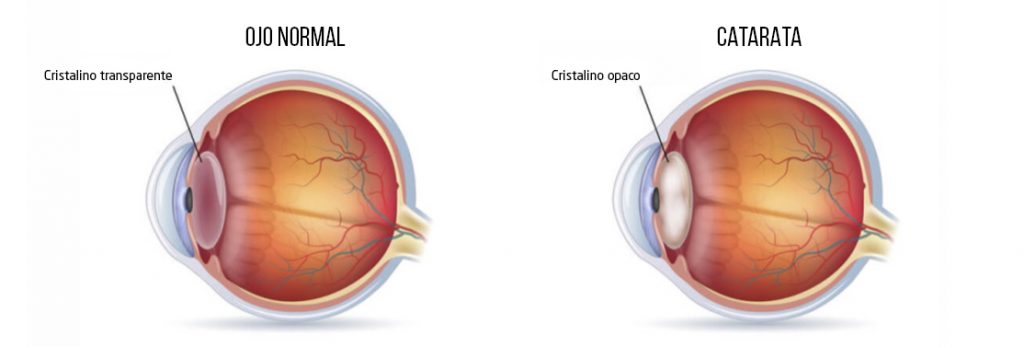
Cataracts are the progressive loss of transparency of the crystalline lens, the eye's natural lens responsible for focusing images correctly.

When the lens becomes opaque, light does not enter clearly and vision becomes blurred, as if looking through fogged glass.

It is a process generally related to age, although it can appear earlier due to various factors. With the passage of time, opacity increases and vision continues to deteriorate.

The good news is that cataract has a definitive solution through surgery, a safe and highly effective procedure that allows the opaque crystalline lens to be replaced by an artificial intraocular lens.

The Dr. Salvador Nebro carries out a personalised assessment to determine the degree of affectation and the most appropriate moment to intervene.

Cataract Eyes

Symptoms of cataracts

The cataract usually manifests itself as a progressive loss of vision. On many occasions the patient gradually adapts to seeing worse and delays the consultation, thinking that “it is normal due to age”.

In addition to the decrease in visual acuity, the following may occur:

  • Difficulty in driving, especially at night

  • Increased light sensitivity and halo vision

  • Frequent changes in the prescription of spectacles

  • Loss of sharpness and contrast

  • Alteration in colour perception

When these symptoms start to affect their autonomy or quality of life, it is time for a specialist assessment with the Dr. Salvador Nebro, ophthalmologist, an expert in cataract surgery.

Causes

Most cataracts are related to the natural ageing of the crystalline lens, being more frequent from the age of 60 onwards. However, they can appear earlier, especially in people with:

  • Diabetes

  • High myopia

  • History of eye trauma or eye surgery

  • Prolonged treatment with certain medicines

Beyond the cause, what is really important is to determine the right time to intervene and prevent further unnecessary progression of the visual loss.

In consultation, the Dr. Salvador Nebro an individualised assessment is carried out to evaluate the degree of affectation and the real impact on their quality of life.

Accurate diagnosis and personalised study

Diagnosis of cataract is quick and certain by means of a complete ophthalmological examination.

During the consultation, the Dr. Salvador Nebro examines the transparency of the crystalline lens in detail and performs complementary tests such as the macular OCT study, which enables the retina to be analysed with precision and other pathologies that may affect vision to be ruled out.

This preliminary study is essential to plan the surgery with maximum safety and to select the most suitable intraocular lens in each case.

Treatment: the ultimate solution

The only effective solution for cataract is surgery.

Although in the initial stages vision may improve slightly by changing the prescription of the glasses, this improvement is usually temporary, as the cataract will continue to evolve.

If you have already been diagnosed with cataracts and you notice that your vision is limiting activities such as reading, driving or enjoying your day-to-day life, surgery allows you to recover clarity and visual quality through a quick, safe and highly effective intervention.

The Dr. Salvador Nebro, The cataract surgeon, a specialist in cataract surgery, will give you personalised advice on the best time to have the operation and the intraocular lens options available.

Pre-operative tests

If, after an initial assessment by Dr. Salvador Nebro, you have  decision to undergo surgery, the next step is to carry out a complete preoperative study. These tests are essential to ensure maximum safety and to plan the surgery accurately.

Cataract surgery is a safe and common procedure, but it is still a surgical intervention, so we must go to the operating theatre with all the medical guarantees.

General Tests

Before the intervention, systemic tests are requested to check that the general state of health is adequate: Electrocardiogram, Chest X-ray, Blood test with coagulation study

These tests rule out anaesthetic risks and ensure that the patient can safely undergo the procedure.

Specific ophthalmological tests

Assessment of the corneal endothelium

Assessment of the corneal endothelium by slit-lamp examination and endothelial microscopy. Important to prevent postoperative corneal oedema.

Corneal topography with aberrometry

To assess the possible suitability of multifocal lenses and for a more complete assessment of toric (astigmatism correcting) lens implantation.

OCT

Macular OCT to assess macular function and rule out other causes of decreased visual acuity that may go unnoticed.

Biometrics

This technique consists of measuring certain parameters of the eye to calculate the power of the lens to be implanted. It is important to apply state-of-the-art formulas to be as precise as possible.

Frequently Asked Questions

We want you to make a decision with complete peace of mind. If your question does not appear in these frequently asked questions about cataract surgery, we will be happy to see you personally in consultation to offer you an individualised assessment.

The surgery is performed in a safe hospital environment, in modern, fully equipped and secure facilities, we operate in Benalmádena, in the Benalmádena complex. Hospital Vithas Xanit in Benalmádena and in Malaga at the HLA El Angel Hospital.

Our cataract surgery normally takes between 15 and 25 minutes. No two surgeries are the same, and these small differences mean that some take longer than others.

 Some patients have good vision the next day, but it is not uncommon for them to have good vision for 3 to 4 days if there is corneal inflammation.

The ideal is to have surgery when the cataract begins to limit our quality of life. It is not advisable to delay surgery for many years because the cataract hardens and this makes surgery more difficult. My advice is that once we have assimilated the problem and have decided to have surgery, we should not give it too much thought and do it soon, because the fear and uncertainty generated by the surgery will only disappear when it is performed.

In patients who in addition to the cataract have a large spectacle defect, my advice is to have surgery earlier, because by removing the cataract we can eliminate the spectacle defect, and the surgery will bring a greater improvement in quality of life.

Yes, when we perform cataract surgery, we implant the intraocular lens resting on the posterior capsule of the crystalline lens. This is normally left clean during surgery, but it is alive, and cells can grow on its surface, causing it to lose its transparency. This phenomenon is called secondary cataract. It usually appears years after surgery and can be easily solved in the doctor's surgery by opening an aperture in the posterior capsule with the Yag laser. Sometimes, to simplify matters, secondary cataract is explained by saying that "the lens is dirty and needs to be cleaned with the laser".

Patients suffering from glaucoma and need cataract surgery, depending on their condition, they can undergo cataract surgery alone or combine cataract and glaucoma surgery in the same surgical procedure. Performing them in the same procedure has the disadvantage that we are performing a more aggressive and inflammatory procedure on the eye, and the advantage that in a single procedure we can act on both problems.

Suffering from macular degenerationr is not a contraindication for cataract surgery, it does mean a lower expectation of visual recovery, as part of the vision loss is due to the macular condition, for which surgery will not bring any improvement, although many patients can improve their quality of life.

Special lenses can be used in these patients that produce a magnification over the macula of near objects that helps reading using the remaining healthy part of the macula.

It is known that cataract surgery does not increase the likelihood of developing a cataract. macular degeneration.

If the patient already has dry macular degeneration, surgery does not increase the likelihood of worsening, however, if the macular degeneration is wet it is unclear whether it may increase the likelihood of worsening.

Real stories, lives that have changed

The cataract surgerys in my eyes has been much better than I could have imagined. From the first visit the doctor's attentions and explanations were always unbeatable, as well as the friendly and close treatment. After the operation the follow-up and treatment were perfect. Now I have "new eyes", which are allowing me to see with more intensity, security and luminosity...it is a real change that has improved not only my vision but also my quality of life. I am very grateful to both the doctor and his staff, whom I congratulate for their professionalism and good work.
Agustin Cabanilla
I had cataract surgery performed by Dr. Nebro. I am delighted with the result, an excellent professional. All the staff at the clinic also looked after me very well. I recommend him.
Ana Nails
My husband had surgery with Dr. Salvador Nebro a couple of months ago, first one eye and then the other for cataracts, myopia and presbyopia and he is delighted with the care received and the results obtained, he has 100 % vision at the moment in both eyes. Very happy with the operation and the treatment received by the doctor and his team, I recommend him to anyone who is thinking of having surgery, very professional.
Silvia Pozo

Recover your vision. Improve your life.

Schedule your assessment with us today.

Scroll to Top