

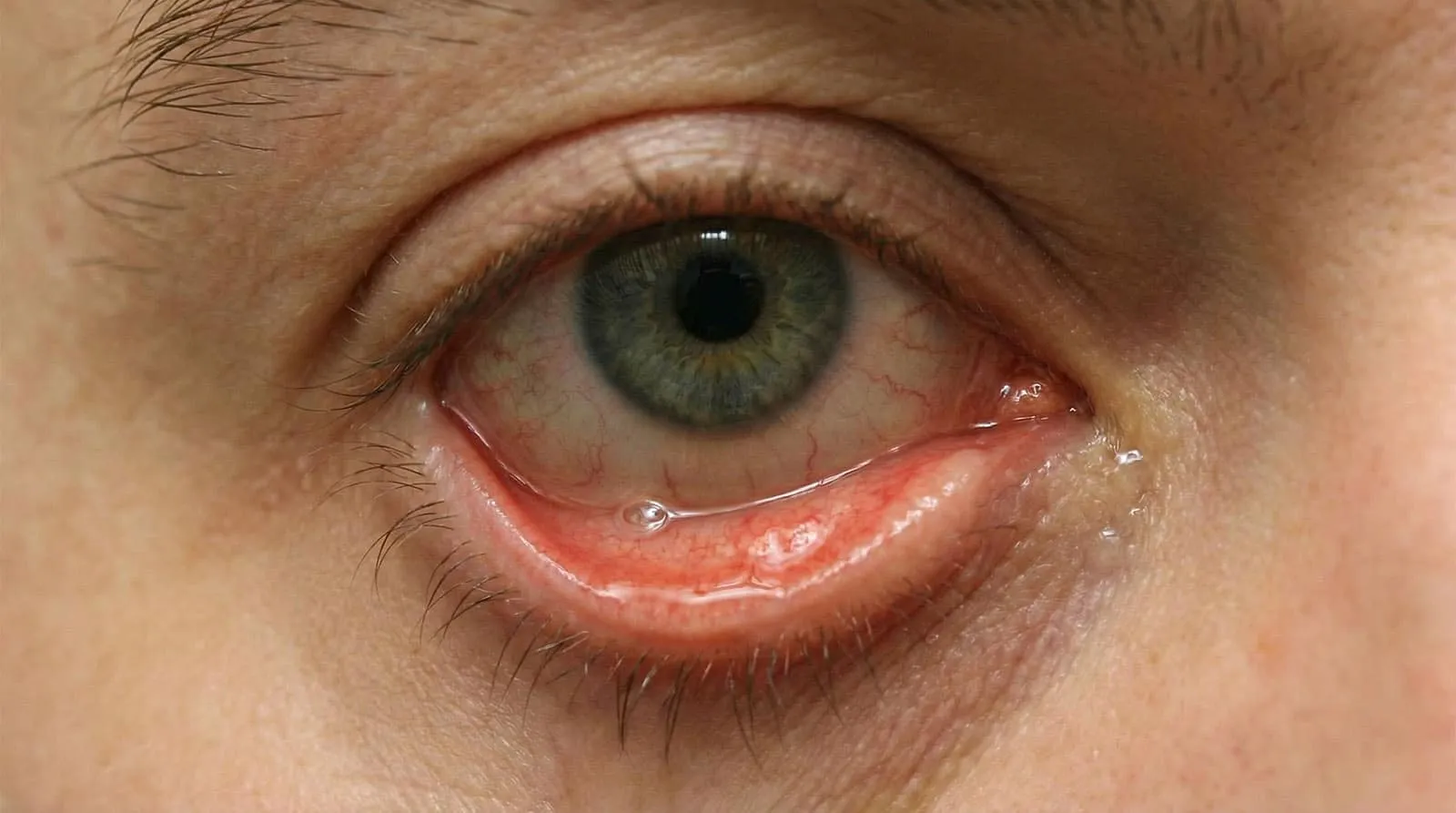

Ectropion is an alteration of the outer part of the eye that causes some alarm in those who suffer from it and in their immediate family environment. Below, we explain all the key facts about it.
What is ectropion and how does it affect the eyelid?
Technically, ectropion is an eye condition in which the lower eyelid turns outwards. The eyelid appears to droop and by leaving the conjunctiva free to air, new complaints often appear, but first, let's take a look at how you can realise in time that you could be suffering from ectropion.
Most common symptoms
They are diverse and occur at some time in advance. We are going to describe them one by one to make it easier for you to know whether or not you have the aforementioned condition.
Dry eyes
Every time you blink, your tears are distributed evenly across your eye. If your lower eyelid starts to pull apart, you'll notice that your eyes are too dry and you'll feel like you've got sand in your lower eyelid.
An excess of tears
As the eyelid does not work properly, tears gradually accumulate, causing a symptom that is usually associated with an allergy or cold, but this is not always the case. It is important to check your eyes to verify the real reason for this circumstance.
Photosensitivity
If, despite wearing sunglasses or staying in a place where there is no direct light, you find that the light bothers you, you may be suffering from ectropion. Corneal irritation caused by dryness of the eye is the main reason. Again, it is essential to rule out other possible diseases or conditions before an accurate diagnosis can be made.
Eye irritation
Your eyes are too red, they bother you, you feel a certain burning and you even notice a certain reddening of both eyelids. If you have this symptom in addition to the previous ones, we recommend that you come to our clinic so that we can check what is happening and determine the most effective solution.
What are the causes of ectropion?
We have just told you that one symptom of ectropion is drooping of the lower eyelid, but this is the consequence of different causes that generate the different types of ectropion.
Senile or involutional ectropion
It is caused by the passage of time, but there are factors that directly affect its appearance, such as smoking or a bad diet. The affected person usually rubs his or her eyes to relieve the itching. This generates a certain laxity in the eyelid muscles, which eventually give way and turn outwards.
Scarring ectropion
As its name suggests, it is the result of a previous scar caused by surgery, a burn, a tumour or severe trauma. In all of the above cases, it is important to monitor what has happened and the level of healing of the scar.
Ectropion of genetic or congenital origin
It would be advisable to know the medical history of your parents, or grandparents, to check if they also suffered from the condition. It is rare and occurs from birth by reducing the opening angle of the eyelids.
Mechanical ectropion
It is caused by the appearance of a tumour, malignant or benign, which increases the weight of the eyelid, causing it to droop or turn outwards. Sometimes, ectropion is the key to detecting the presence of the tumour and designing the most appropriate treatment.
Paralytic ectropion
Facial nerve paralysis affects the orbicularis oculi muscle that surrounds both eyelids. The loss of the nerve impulse causes a reduction in muscle tone and eventually leads to eversion, or turning, of the eyelid.
How is ectropion treated and prevented?
As soon as you notice any of the above symptoms, come to the Nebro Ophthalmology Clinic so that we can assess your case. The most effective treatment is an outpatient procedure that tightens the tendon to which the eyelid is anchored. Preventive measures include direct observation of the symptoms and regular visits to the ophthalmologist to check that your eye health is the most appropriate for your age and lifestyle.