

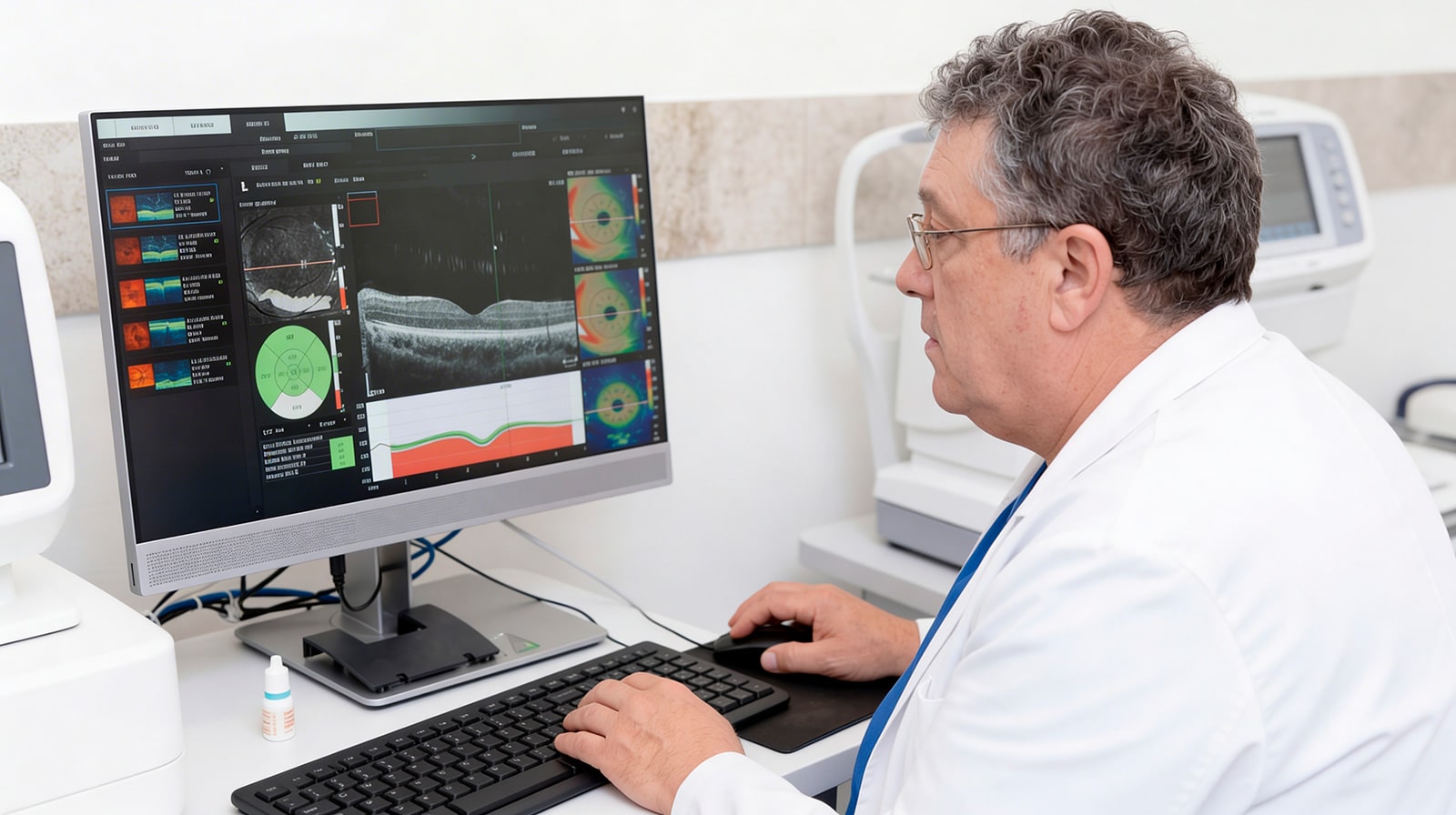

If you are experiencing eye problems, you may be suffering from inflammation of the optic nerve. This condition, which has a worldwide incidence of 0.05 %, has symptoms that impair the patient's quality of life. The good news is that ophthalmological science is capable of solving it.
What is optic neuritis and what causes it?
Optic neuritis is an ophthalmological condition characterised by inflammation of the optic nerve. The optic nerves are a bundle of nerve fibres that carry visual information from our eyes to the brain; when this «wiring» becomes inflamed, this communication is interrupted, worsening our visual acuity.
Optic neuritis is more common in women than in men (3:1). Moreover, although it can affect people of any age, it has its highest peak prevalence between 45 and 54 years of age (0.0713 %).
Why does the optic nerve of the eye become inflamed?
The main cause of optic neuritis is a failure of the immune system. However, the condition can also have other origins (nutritional, infectious, ischaemic, etc.).
- Autoimmune diseases: the immune system mistakenly attacks the myelin covering the optic nerve. In fact, half of all patients with multiple sclerosis (MS) suffer from optic neuritis.
- Infections, whether caused by viruses (measles, mumps, shingles, etc.) or bacteria (syphilis, Lyme disease, etc.).
- Systemic disorders, such as lupus or sarcoidosis.
- Other causes: lack of blood supply to the nerve head (ischaemic optic neuropathy), vitamin B12 deficiency and exposure to certain toxins (e.g. methanol).
How to tell if you have a swollen optic nerve
Optic neuritis is easily identified by its symptoms. Symptoms usually appear within hours or days. Depending on the age of the patient, they usually affect only one eye (adults) or both eyes (children).
- Eye pain that worsens with eye movement (most common symptom).
- Loss of vision of varying intensity.
- Altered colour perception: colours appear dull or less intense.
- Vision of flashes of light or flickering lights when the eyes are moved.
- Uhthoff's phenomenon: temporary worsening of vision when body temperature rises.
- Abnormal pupillary reaction: the pupil does not contract as it should when exposed to bright light..
How long can optic neuritis last?
The exact duration of optic neuritis will depend on the underlying cause. Most patients usually recover spontaneously within 2 to 3 weeks. However, acute cases may take up to 6 months to resolve. It should be noted that this is a recurrent condition: 25 % of patients experience several episodes during their lifetime.
Although the main symptoms of optic nerve inflammation usually resolve on their own, it is normal for sequelae to remain. Many patients report that they no longer see as well as they did before the episode. It is also possible that this condition can lead to complications such as permanent optic nerve damage or decreased visual acuity.
How optic neuritis is diagnosed and treated
Optic neuritis must be diagnosed and treated by an ophthalmologist. This specialist will follow a clinical process consisting of eye examinations and advanced imaging tests to confirm optic neuritis and rule out other pathologies. Once the inflammation and its origin have been diagnosed, he or she will proceed to apply a treatment according to the severity of the case, in order to accelerate visual recovery.
Diagnosis of optic nerve inflammation
These are some of the tests used in ophthalmology to diagnose optic neuritis:
- Standard ophthalmological examination (including Ishihara test).
- Pupillary reaction test.
- Ophthalmoscopy.
- Magnetic resonance imaging (MRI).
- Optical Coherence Tomography (OCT).
- Visual Evoked Potentials (VEP).
Treatment of optic neuritis
- Note: In mild cases, the ophthalmologist may not apply any treatment, as the nerve can be expected to deflate on its own.
- Corticosteroids: this is the most common treatment. Intravenous and oral doses are usually combined.
- Plasma exchange (plasmapheresis): this treatment is reserved for severe cases that do not respond to corticosteroids.
Optic neuritis has a very favourable prognosis for recovery in most cases. In fact, 70 to 90 % of patients normalise their vision in less than 1 year. However, subtle sequelae may remain despite treatment (e.g. altered colour perception).
A problem such as inflammation of the optic nerve deserves a visit to a specialist. At the Clínica Oftalmológica Dr. Nebro we have been caring for the visual health of our patients for more than 20 years with the latest in ocular technology. If you are in Fuengirola or in the surrounding area, all you have to do is make an appointment so that we can help you.