

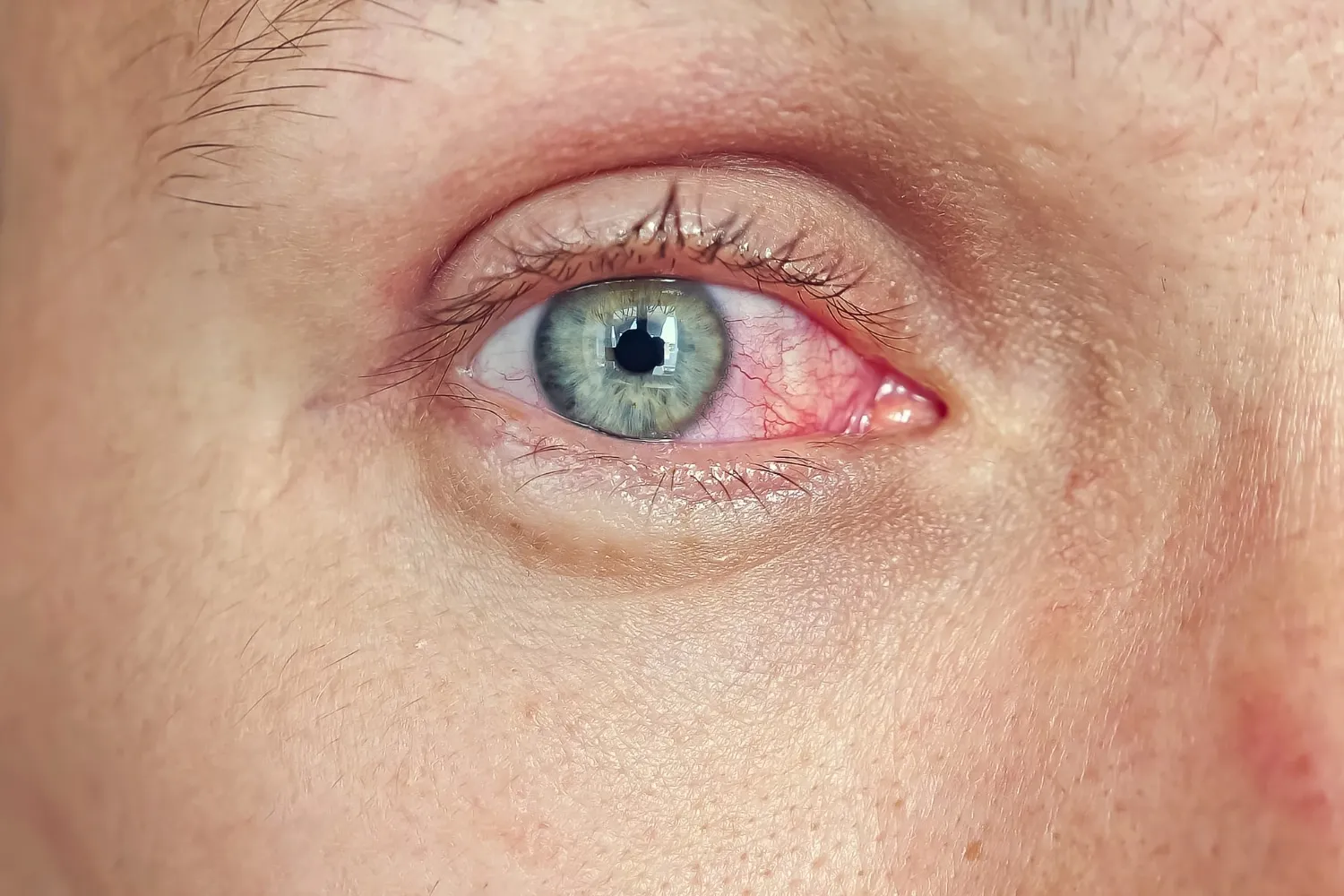

The conjunctival hyperemia is an eye disorder that, although generally mild, is highly prevalent in the population. Specifically, estimates suggest that around 30 % of visits to the ophthalmologist are due to this condition.
What is conjunctival hyperemia
The conjunctival hyperemia is characterised, among other things, by a marked reddening of the conjunctiva, the white part of the eye.
This redness is due to abnormal dilation of the blood vessels in the conjunctiva, the transparent membrane that lines the sclera and the inside of the eyelids.
Although the conjunctival hyperemia is certainly annoying and sometimes painful, but it is a condition that is usually not too serious and may even resolve spontaneously. However, it is a condition that usually requires medical attention.
Causes of conjunctival hyperemia
The range of possible causes is very wide, but we are going to talk about the most common ones.
Irritations and allergies
Exposure to irritants such as dust, smoke, chemicals and allergens (such as pollen or pet hair) can cause conjunctival hyperemia.
Conjunctivitis
The conjunctivitis is an infection of the conjunctiva of the eye that causes redness and inflammation. This infection can be viral or bacterial in origin, so a differential diagnosis must be made in order to combat it properly.
Other eye diseases and disorders
Some chronic diseases and disorders of the eye, such as glaucoma or of the dry eye syndromecan cause conjunctival hyperemia.
Eye trauma
Any blow or erosion to the eye is likely to lead to conjunctival hyperemia.
Subconjunctival haemorrhage
Rupture of the blood vessels in the conjunctiva can cause blood to accumulate in the sclera, resulting in inflammation and irritation of the sclera.
Environmental factors
Prolonged exposure to screens, lack of blinking, contact lens wear, very dry air and excessively cold or heated spaces can cause recurrent episodes of conjunctival hyperemia.
Most common symptoms
Conjunctival hyperaemia produces symptoms that can occur individually or together.
In addition, the nature of the symptoms depends on the cause of the hyperemia. The most characteristic symptoms are as follows:
Reddening of the eye
The most common symptom is redness of the white part of the eye.
Irritation and burning
Many sufferers experience a burning sensation or irritation in the eye, which can be mild, intense or even painful.
Eye itching
Itching of the eye is another common symptom, especially when the cause is an allergy.
Tearing
It is very common for the affected eye to water excessively and continuously.
Other abnormal eye secretions
Depending on the cause, mucous or purulent discharge may occur, especially in cases of infectious conjunctivitis.
Sensation of sand inside the eye
Some people experience the sensation of having sand inside the eye socket.
Photophobia
Eyes may become more sensitive to light, causing discomfort and vision loss in well-lit environments.
Blurred vision
Finally, irritation and secretions can cause vision to become blurred.
How conjunctival hyperemia is treated
The treatment of conjunctival hyperaemia depends on the underlying cause. The following are the usual treatment options, depending on the cause of the conjunctival hyperaemia:
Antibiotics
In case of bacterial infections, antibiotic eye drops are often necessary to effectively fight the infection.
Antivirals
The same applies to persistent viral infections, which are treated with antiviral eye drops and ointments.
Antihistamines
When conjunctival hyperemia is caused by allergies, antihistamines are the most effective option to mitigate the symptoms.
Eye rest
Avoiding excessive use of electronic devices and not straining your eyes is essential to reduce irritation and discomfort.
Cold compresses
Applying cold compresses to closed eyelids reduces swelling and redness.
Avoidance of allergens and irritants
In many cases, treatment is reduced to identifying and avoiding substances that cause allergy or irritation.
Anti-inflammatory eye drops
It is a palliative, not curative, treatment aimed at reducing inflammation and redness.
Artificial tears
Artificial tears are highly indicated in cases where conjunctival hyperemia is caused by dry eye syndrome.
If you experience any symptoms that might make you think that you are suffering from conjunctival hyperemia, in the Dr. Nebro Ophthalmology Clinic we have the human and material resources to find out what causes it and prescribe the appropriate treatment.