

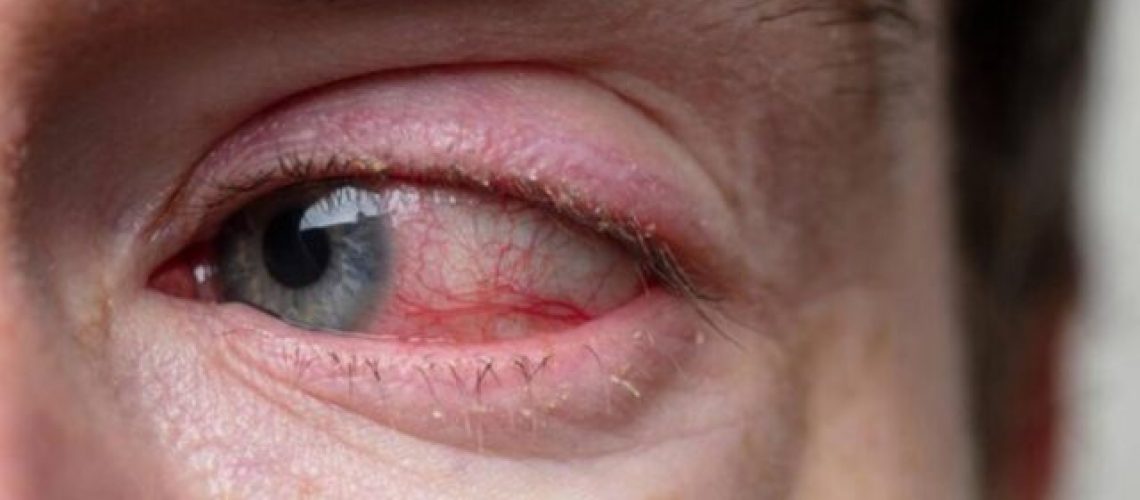

Cases of herpes in the eye are frequent in ophthalmology consultations. Let's find out about this infectious eye condition, its symptoms, possible complications and how to deal with it therapeutically.
What is herpes in the eye?
An ocular herpes is an infection caused by the herpes simplex virus (HSV). Most herpes eye infections are caused by a variant of the virus called HSV-1 (herpes simplex virus type 1).
The HSV virus is the same virus that causes herpes infections of the mouth, lips, skin and genitals. It is a highly contagious virus and, once infected for the first time, it becomes latent in the body.
Herpes in the eye: symptoms
Symptoms of a herpes eye infection include:
- Redness of the eye, especially around the cornea
- Tearing
- Eye pain or discomfort
- Swelling around the eye
- Sensitivity to bright light
- Cloudy or blurred vision
A clue to herpes in the eye is that it usually occurs only on one eyeball.
However, since the symptoms are similar to those of multiple eye disorders, the differential diagnosis needs to be established by an ophthalmologist.
Possible causes of ocular herpes
- Uncontrollable eye movement.
- Shaky or blurred vision.
- Balance problems.
- Vertigo.
- Dizziness.
- Light sensitivity.
- Night vision problems.
Usually, there is not just one symptom, but at least two of them.
Can ocular herpes become complicated?
The herpes eye infections Simple, but it is essential to detect and deal with them in good time.
Even so, it is not uncommon for severe cases to occur with an increased risk of complications, such as the following:
- Scarring of the cornea, with permanent blurred vision
- Ocular superinfections caused by bacteria or fungi
- Partial but permanent loss of vision
- Recurrences of herpes infection
- In very severe and untreated cases, the virus can affect the optic nerve and cause glaucoma.
How to treat herpes in the eye?
Some herpes infections of the eye heal spontaneously within two to three weeks, but others can spread over long periods of time. That is why it is always a good idea to treat them.
To speed healing of herpes in the eye, the first-choice treatment includes:
- Antiviral eye drops or ointments, usually based on acyclovir ophthalmic: these prevent the spread of the virus and are usually used several times a day for up to two weeks.
- Steroid eye drops, to reduce inflammation and eye discomfort. Corticosteroids should only be applied if we already have protection with acyclovir, otherwise we would worsen the herpes infection..
Oral systemic antivirals are only used in severe, highly recurrent cases or when the affected person's immune system is severely compromised.
The importance of a correct diagnosis for the success of treatment
Do not make the mistake of applying remedies at your own risk: go to the ophthalmologist as soon as you experience the slightest symptoms. For this you can count on the professional service that we offer at the Dr. Nebro Ophthalmology Clinicwhere we have a team of medical professionals to help you with all kinds of eye problems.
The success of any treatment depends on the correct diagnostic identification of the disorder. And since the symptoms of most eye diseases are very similar, there is a very high risk of missing the target with self-diagnosis.
Therefore, if we act on our own and mistake herpes in the eye for another condition by applying an acyclovir eye ointment, not only will we not notice any improvement, but the symptoms will most likely worsen.